
In today’s fast-evolving medical landscape, laparoscopic surgery has become a cornerstone of modern healthcare. With its minimally invasive techniques, quicker recovery times, and improved patient outcomes, the demand for skilled laparoscopic surgeons is at an all-time high. Hospitals and healthcare facilities are increasingly seeking professionals who have mastered these advanced surgical skills through top-tier laparoscopy training courses.
As we move into 2025, choosing the right laparoscopic surgery training program is more critical than ever for medical professionals aiming to stay competitive and deliver the highest standard of care. With so many options available, from online modules to hands-on fellowships, selecting the best laparoscopy course 2025 can feel overwhelming.
This guide will walk you through everything you need to know to make an informed decision. Whether you are a practicing surgeon looking to upgrade your skills or a medical graduate stepping into specialized surgery, you’ll learn how to evaluate course quality, key factors to consider, and how to find a program that aligns with your career goals. Let’s dive in and make your journey towards becoming an expert laparoscopic surgeon a success!
Contact us for information at +918686582020
Choosing the right laparoscopy training course in 2025 starts with a clear understanding of your career goals. Whether you are a beginner stepping into the world of laparoscopic surgery education, an intermediate practitioner looking to refine your techniques, or an advanced surgeon aiming for specialized skills, identifying your current level is crucial.
Are you planning to pursue general surgery, gynecology, urology, or another specialty? Each field demands different laparoscopic competencies. Selecting a course that focuses specifically on your area of interest ensures a direct impact on your career growth and clinical expertise.
Next, decide whether you are seeking a short-term skill upgrade or a long-term specialization. Short-term courses often focus on essential skills like suturing and basic laparoscopic procedures, ideal for quick advancements. In contrast, comprehensive programs offer in-depth training, preparing you for a full-fledged career in laparoscopic surgery.
Aligning your chosen course with your long-term aspirations will help you invest your time and resources wisely. The best laparoscopy training programs in 2025 not only enhance technical skills but also open doors to certifications and fellowships that elevate your professional profile.
By understanding where you stand and where you want to go, you can confidently select a laparoscopic surgery course that propels your medical career forward
One of the first steps is to carefully check the program's accreditation and certification. Accreditation ensures that the course meets updated industry standards and provides quality education aligned with the latest surgical techniques. In 2025, with healthcare evolving rapidly, enrolling in an accredited course can make a significant difference in your skill development and professional credibility.
Why does accreditation matter in 2025? It guarantees that the curriculum, faculty, and training facilities meet global healthcare standards, ensuring you receive the best education possible. Recognized institutions like the Society of American Gastrointestinal and Endoscopic Surgeons (SAGES) and accrediting bodies such as the Royal College of Surgeons are highly trusted. Choosing a course endorsed by such organizations ensures that your training will be respected worldwide.
When considering global certifications vs. national certifications, remember that global certifications may open more international career opportunities, while national certifications could be ideal if you plan to practice locally. Both are valuable but should align with your career goals.
Finally, obtaining the right certification directly affects your future job prospects. Employers increasingly prefer candidates with accredited laparoscopy training, offering better job placements, higher salaries, and faster career growth.
Whatsapp NowIt’s essential to evaluate the course curriculum and structure carefully. A good program balances hands-on training and theoretical classes, ensuring that you gain practical experience along with a strong conceptual foundation.
When comparing programs, focus on the key laparoscopic skills taught. Look for courses that offer in-depth training in suturing techniques, knot tying, and laparoscopic ergonomics. These fundamental skills are critical for achieving precision and minimizing patient risk during minimally invasive surgeries.
Another important factor is the inclusion of the latest technologies. The best laparoscopic training centers in 2025 will integrate AI-assisted surgery and robotic laparoscopy into their curriculum. Learning how to work with these innovations can significantly enhance your surgical efficiency and future-proof your career.
Additionally, prioritize programs that utilize simulation labs and virtual reality (VR) modules. Simulation-based training in laparoscopy allows you to practice complex procedures in a risk-free environment, improving your dexterity and decision-making skills. VR modules offer an immersive experience, replicating real-life surgical scenarios that build confidence before entering the operating room.
Choosing a laparoscopy training course that blends skill development, cutting-edge technology, and simulation-based education will set you apart in 2025’s competitive surgical landscape. Always invest in a course that not only meets current standards but also prepares you for the future of minimally invasive surgery.
When selecting the right laparoscopy training course in 2025, the quality of faculty and mentorship should be your top priority. Experienced surgeons as trainers bring invaluable real-world expertise, ensuring you learn both fundamental and advanced laparoscopic techniques with precision. Their practical insights, problem-solving skills, and case-based teaching methods can significantly enhance your surgical proficiency.
Strong mentor support during and after the course is equally important. A great laparoscopy training program provides continuous guidance beyond the classroom, helping you navigate challenges in real clinical settings. Access to mentors for case discussions, troubleshooting, and career advice can dramatically accelerate your growth in minimally invasive surgery.
Before enrolling, take time to research the faculty profiles. Look for trainers who are board-certified, have extensive hands-on surgical experience, and are actively involved in research or academic contributions. Professional affiliations, published work, and awards are also positive indicators of faculty excellence.
Don’t forget to read testimonials and alumni reviews. Honest feedback from previous students offers real insight into the teaching quality, mentor accessibility, and post-course support. Alumni success stories often reflect the program’s true value, helping you make a confident choice for your future in laparoscopic surgery.
Choosing the right laparoscopy training course is a vital step toward a successful surgical career — make it wisely!

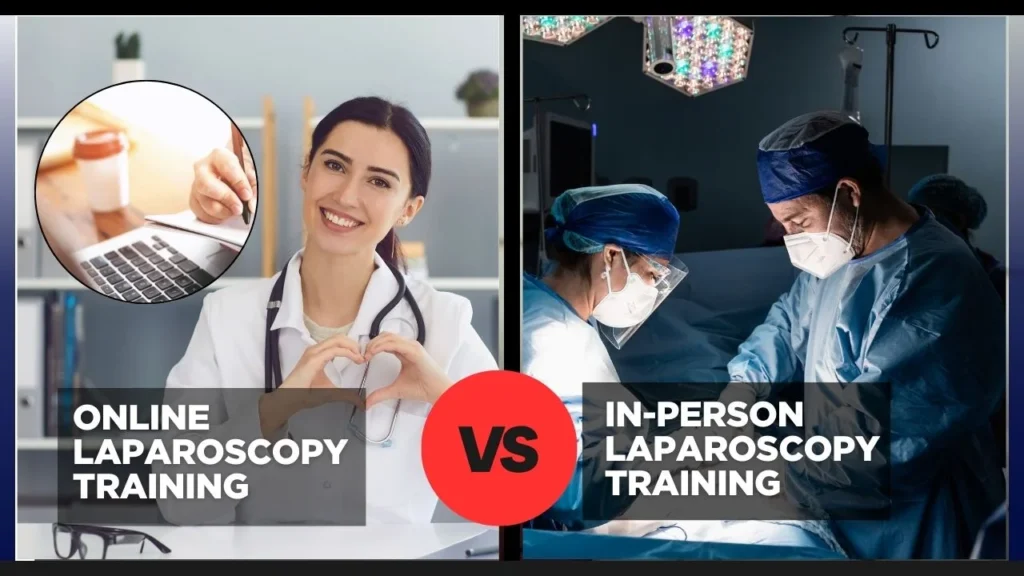
In-person laparoscopy training offers hands-on experience, immediate feedback, and valuable peer interaction. However, it often requires travel, higher costs, and time away from clinical duties.
Online laparoscopy courses, powered by virtual labs, AR/VR simulation tools, and interactive modules, bring flexible learning to your doorstep. They are cost-effective and accessible, but they can sometimes lack the tactile skills development that only real-world practice provides.
Hybrid laparoscopy training programs combine the best of both worlds — theoretical learning online, with scheduled hands-on practice sessions. This mode is becoming increasingly popular among working professionals seeking a balanced approach.
In 2025, live interaction, mentorship, and real-time practice sessions remain critical for mastering laparoscopic skills. Even with advanced simulations, the tactile feel of instruments and the nuances of patient anatomy are best learned through direct experience.
Recommendation:
Always choose accredited laparoscopy courses that blend technology with live practice to ensure a comprehensive learning experience.
When evaluating programs, prioritize courses that offer live surgeries, opportunities to observe, and even assist during real procedures. Direct exposure to the operating room environment provides invaluable hands-on experience that simulated labs simply cannot replicate.
One of the most critical factors is the number of procedures you’ll actually perform. A top-tier course should guarantee extensive hands-on practice, allowing you to master various laparoscopic techniques confidently. More procedures mean better skill development, faster decision-making, and improved patient outcomes.
Furthermore, the value of real-case studies outweighs that of simulated cases. Real patient scenarios expose you to unexpected challenges, teaching you adaptability and critical thinking—skills every laparoscopic surgeon must master. Simulations are helpful, but they often lack the unpredictability and complexity of real surgeries.
Another key point is the hospital affiliations of the training institute. Courses partnered with reputed hospitals provide greater exposure to diverse and complex cases. Working alongside experienced surgeons in accredited medical centers ensures you’re learning in a dynamic, real-world environment.
In 2025, make a smart choice by selecting a laparoscopy training program that balances theory with robust clinical exposure, real-case involvement, and strong hospital ties—giving your career the solid foundation it deserves.
A Laparoscopy training course in 2025 involves balancing several key factors like cost, duration, and flexibility. With medical education evolving rapidly, it’s crucial to invest wisely without compromising on quality.
When evaluating courses, cost plays a significant role. While budget-friendly options are attractive, always prioritize quality over price. The Medicity Research Institute, recognized as one of the best hands-on laparoscopic training centers in India, offers affordable yet comprehensive programs. They provide a wide range of options, including fellowships in minimal access surgery, ensuring students receive expert training using the latest technologies.
Duration and flexibility are equally important, especially for working professionals. Short-term workshops are ideal for quick skill updates, while long-term diplomas offer in-depth expertise. The Medicity Research Institute caters to diverse needs with weekend, evening, and modular courses, making it easier for doctors to balance work and learning.
Financial support options such as scholarships, grants, and flexible payment plans are also available to ease the financial burden, making high-quality laparoscopic training more accessible.
In 2025, whether you’re choosing a weekend workshop or a full-time fellowship, the key is to align your goals with the course structure. Institutions like the Medicity Research Institute ensure that investing in your surgical skills is both affordable and rewarding.
When selecting a program, don’t just focus on the curriculum — consider the post-training support and career assistance offered. Here’s what to look for:
🔹 Job Placements, Internships, and Fellowships Top training institutes offer direct pathways to job placements, hands-on internships, and prestigious fellowships. This real-world experience is vital for building skills and boosting your career prospects.
🔹 Networking Opportunities Look for programs that facilitate connections with renowned surgeons, hospitals, and healthcare organizations. Strong professional networks can open doors to new opportunities and collaborations.
🔹 Access to Continued Education, Advanced Workshops, and Webinars The best laparoscopy training courses provide lifelong learning options. Workshops and webinars keep you updated with the latest techniques and technological advancements in minimally invasive surgery.
🔹 Alumni Support Communities Institutes with active alumni networks offer ongoing mentorship, career advice, and professional growth support. Being part of a vibrant community can make a significant difference throughout your career journey.
Choosing a course with comprehensive post-training support ensures you’re not just learning — you’re building a future in laparoscopic surgery.
Choosing the right laparoscopy training course in 2025 requires careful thought and planning. Key factors to consider include the course curriculum, hands-on training opportunities, faculty expertise, certification recognition, and access to the latest surgical technologies. Always prioritize programs that offer real-world practice, mentorship, and international accreditation to ensure you receive the highest quality education.
Take the time to research, compare, and invest wisely. Read reviews, visit campuses if possible, and speak to alumni to get genuine insights. The best laparoscopy course isn’t just about prestigious names—it’s about finding a program that aligns with your personal learning style, career goals, and the evolving demands of minimally invasive surgery.
By making a thoughtful decision today, you are laying the foundation for a future-ready surgical career. The skills you gain now will shape your success in tomorrow’s operating rooms. Stay committed, stay curious, and embrace the journey toward becoming a leader in the world of laparoscopy.

The fundamentals course focuses on core principles of laparoscopic surgery, including patient safety, ergonomic techniques, and basic procedural skills.
Fees usually range from ₹50,000 to ₹2,00,000 depending on the course length, location, and facilities offered.
Reputed institutes do. You might get continued mentorship, access to alumni groups, updates on new procedures, and even help with job placement.
WhatsApp Now
Start your journey towards excellence with The Medicity!