

Laparoscopic surgery, often referred to as minimally invasive surgery, has revolutionized the field of healthcare by offering patients quicker recovery times, reduced scarring, and lower risk of complications. As technology advances, the demand for skilled laparoscopic surgeons continues to grow, making it a vital area of expertise for aspiring and practicing medical professionals. Mastery of laparoscopic techniques is no longer optional — it’s essential for surgeons aiming to provide the highest standard of care.
Specialized training in laparoscopic surgery is critical because it requires a unique set of technical skills, precision, and an in-depth understanding of advanced surgical equipment. Proper hands-on experience under expert guidance can make a significant difference in a surgeon’s career, enhancing both competence and confidence.
The purpose of this blog is to guide medical students, junior doctors, and practicing surgeons in choosing the best institute for laparoscopic surgery training. By understanding the key factors to consider, you can make an informed decision that shapes your future in this ever-evolving field.
Key Factors to Consider When Choosing a Laparoscopic Training Centre
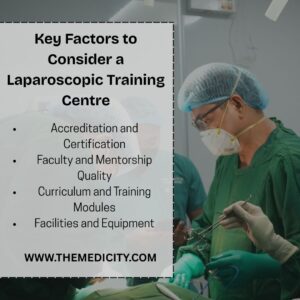 These are Following Key Factors to Consider a Laparoscopic Training Centre:
a) Accreditation and Certification
First things first — make sure the centre is accredited by a credible surgical board or academic body. This guarantees that their curriculum, safety standards, and teaching quality meet professional benchmarks.
Certificates from a reputed centre don’t just pad your resume — they open doors for better hospital placements, international programs, and long-term career advancement.
b) Faculty and Mentorship Quality
Great mentors make a world of difference. Look for instructors who are seasoned laparoscopic surgeons actively practicing in the field.
Also ask: will I get mentorship during AND after the course? Being able to reach out for guidance when you’re in the OR later on is a game-changer.
c) Curriculum and Training Modules
A strong program finds the sweet spot between learning the theory and doing the work. You’ll want a course that offers:
- Daily hands-on sessions
- Simulation and dry lab training
- Access to live or recorded surgeries
- Progressive skill-building
If they offer modules on things like energy sources, suturing, or port positioning, that’s a solid sign you’re in the right place.
d) Facilities and Equipment
Let’s talk about tools. A good centre should have:
- HD laparoscopic towers and cameras
- Box trainers and virtual simulators
- Wet labs using animal tissue or advanced models
And here’s a tip — ask about their student-to-equipment ratio. If there are too many students per station, your hands-on time could be limited.
Accreditation and Reputation
When selecting the best institute for laparoscopic surgery training, accreditation and reputation are crucial factors. An accredited institute ensures that the training program meets high educational and clinical standards, providing you with the skills needed to excel in minimally invasive surgery. Choosing an institute recognized by national or international medical bodies adds significant value to your credentials.
The reputation of a laparoscopic surgery training center plays a vital role in shaping your future career. Graduating from a well-respected institution can open doors to prestigious hospitals, research opportunities, and advanced fellowships, giving you a competitive edge in the medical field.
To verify an institute’s accreditation and rankings, research their affiliations, check official medical education directories, and read student reviews. Looking into success stories of alumni and institutional partnerships can also give insight into the quality of education and practical exposure provided.
 Expertise of Faculty and Mentors
 Expertise of Faculty and Mentors
 With many options available, it’s essential to focus on institutes that offer comprehensive training, updated techniques, and strong mentorship. A reputable laparoscopic training institute should provide a blend of theoretical knowledge and intensive hands-on practice.
One of the key factors to consider is the expertise of the faculty. Highly experienced surgeons not only teach techniques but also share real-world insights that textbooks cannot offer. The training center should also prioritize state-of-the-art facilities and simulation labs to ensure practical exposure.
Additionally, look for an institute with a strong track record of alumni success and positive reviews. Institutes that offer small batch sizes often ensure personalized attention, which enhances learning outcomes. Checking international affiliations, certification authenticity, and the range of laparoscopic procedures taught will help you make an informed choice. Investing in quality training today can shape your future as a confident and skilled laparoscopic surgeon.
Comprehensive Curriculum and Training Modules
A top-tier institute offers a comprehensive curriculum, combining theoretical knowledge with hands-on experience. Look for programs accredited by recognized medical boards and taught by experienced laparoscopic surgeons.
Another important factor is the balance between classroom learning and practical sessions. Institutes that provide access to modern simulation labs and live surgery observations ensure that students gain real-world skills in a controlled environment.
Additionally, consider institutes that emphasize simulation-based training, allowing learners to practice laparoscopic techniques safely before entering the operating room. Small class sizes, personalized mentorship, and ongoing skill assessments are also key indicators of a quality training center. Ultimately, the best laparoscopic surgery training institute will focus on nurturing technical precision, decision-making, and patient safety—equipping you for a confident start in the surgical field.
Hands-On Training Opportunities
High-quality laparoscopic surgery training heavily depends on the availability of hands-on training opportunities. Leading institutes provide extensive access to cadaver labs, enabling students to practice surgical techniques in a realistic environment. Participation in live surgeries under expert supervision further sharpens critical decision-making skills.
An ideal training program strikes the right balance between hands-on practice and classroom teaching. While theoretical lectures build the foundation, frequent practice sessions bridge the gap between knowledge and surgical competence. This balanced approach ensures that students are not just academically sound but also practically skilled.
Moreover, access to state-of-the-art laparoscopic equipment and advanced surgical technologies is essential. Training with modern tools mirrors real-world operating room conditions and equips surgeons with up-to-date skills. Institutes that invest in technology-driven learning environments give students a competitive edge in their surgical careers.
Choosing a laparoscopic surgery course with a strong focus on hands-on experience will dramatically boost your surgical expertise and career confidence.
Infrastructure and Facilities
Best institute for laparoscopic surgery training, infrastructure and facilities play a crucial role in shaping your learning experience. A top-tier institute should offer state-of-the-art surgical suites and advanced labs equipped with the latest technology. These facilities ensure that trainees practice in a setting that closely mirrors real-world surgical environments, enhancing skill development and confidence.
The availability of simulation labs, virtual reality (VR) technology, and other innovative learning aids is another key factor. Simulation-based training allows surgeons to perfect their techniques in a risk-free environment, making it an essential part of laparoscopic surgery education. Institutes investing in these tools demonstrate a commitment to delivering comprehensive, hands-on learning.
Moreover, a modern, well-organized classroom environment combined with strong student support services can significantly enhance academic performance. Personalized mentorship, accessible resources, and interactive learning spaces foster a positive and engaging educational journey.
Choosing an institute with outstanding infrastructure not only sharpens your technical skills but also prepares you for real surgical challenges, setting the foundation for a successful career in laparoscopic surgery.
Alumni Success and Placement Assistance
 Alumni Success and Placement Assistance
 The Laparoscopic surgery training, one of the strongest indicators of quality is alumni success. Graduates who thrive in competitive surgical careers reflect the strength and depth of the program’s curriculum, hands-on experience, and mentorship. Their achievements serve as proof that the training institute provides a solid foundation for real-world practice.
Additionally, networking opportunities play a crucial role in shaping a surgeon’s career. Leading institutes connect students with industry experts, experienced surgeons, and alumni networks, offering valuable mentorship, collaboration, and job prospects. A strong professional network can open doors to prestigious hospitals and advanced surgical fellowships.
Finally, it’s important to choose institutes that offer placement assistance or fellowship support after training. Institutes committed to student success often have partnerships with top hospitals and healthcare organizations, ensuring that trainees transition smoothly from education to employment.
Reviews, Testimonials, and Word-of-Mouth
When it comes to advancing your skills in laparoscopic surgery, selecting the right training institute is crucial. With so many options available, it’s essential to research carefully to ensure you’re making a smart investment in your medical education.
- Reviews, Testimonials, and Word-of-Mouth
Start by reading authentic reviews on trusted platforms like Google, Trustpilot, or dedicated medical forums. Pay attention to detailed testimonials that highlight the quality of training, mentorship, and hands-on practice opportunities. Authentic, well-explained reviews are often more reliable than generic praise. - How to Research Authentic Reviews
Look beyond the institute’s website. Search independently for feedback on third-party sites and professional networks like LinkedIn. Join online groups of medical professionals where former students discuss their experiences openly. Comparing reviews across multiple platforms helps you form a balanced opinion. - Reaching Out to Past Students for Real Feedback
Nothing beats firsth and insight. Reach out to alumni through LinkedIn or alumni groups. Ask specific questions about the instructors’ expertise, training modules, and post-training support. Genuine feedback from past students can reveal hidden strengths or weaknesses of an institute. - Red Flags to Watch For in Reviews
Be cautious if you notice overly polished, repetitive testimonials or if negative reviews are consistently about the same issues, like poor equipment or lack of practical sessions. A reputable laparoscopic surgery training institute will have a majority of honest, balanced reviews.
Choosing the right institute can shape your surgical career—so take your time, do your research, and trust the feedback of real learners!
Cost, Scholarships, and Financial Support
Understanding the full cost structure is crucial. It’s important to consider not just tuition fees, but also additional expenses like course materials, certifications, and hands-on practice costs. Leading centers like The Medicity Research Institute, one of the most advanced laparoscopic training centers in India, provide transparent pricing details on their The Medicity.
Prospective students should also explore the availability of scholarships, discounts, or flexible payment plans that can ease financial pressure. Remember, value matters more than just price — investing in a top-quality training program ensures a stronger, more successful surgical career.
Conclusion
Choosing the right institute for laparoscopic surgery training is a crucial decision that can significantly influence your medical career. With the growing demand for skilled laparoscopic surgeons, enrolling in a reputable, advanced training center is more important than ever. When evaluating options, key factors to consider include faculty expertise, hands-on training opportunities, infrastructure, certification validity, and post-training support.
The Medicity Research Institute stands out as one of the leading advance laparoscopic training centers in India. With state-of-the-art facilities, experienced mentors, and a curriculum designed for real-world practice, Medicity ensures that surgeons are well-equipped to handle modern surgical challenges. Their programs offer extensive hands-on sessions, simulation-based learning, and personalized mentorship, making it one of the best choices for aspiring laparoscopic surgeons.
Another important aspect is the global recognition of the certification and the availability of mentorship after course completion. Institutes like The Medicity offer ongoing support, career guidance, and opportunities for continuous learning, crucial for long-term success in the surgical field.
Q. What is the qualification for laparoscopic surgery?
Candidates must have an MBBS degree, and many courses also require postgraduate specialization like MS or DNB in surgery or gynecology.
Q. Is the certification valid internationally?
Yes, certifications from reputed Indian institutes are recognized and accepted internationally in many countries.
Q. What is the salary of laparoscopic Surgery?
A laparoscopic surgeon typically earns between ₹10 lakh to ₹50 lakh per year, depending on experience and location.
Q. How long does it typically take?
Laparoscopic surgery training courses usually take between 2 weeks to 3 months, depending on the level and specialization.
Q. What is the cost of laparoscopic surgery training?
The cost typically ranges from ₹1,50,000 to ₹15,00,000 depending on the institute and course duration.