

Why Laparoscopic Training Is Essential for Modern Surgeons
In recent decades, the landscape of surgery has dramatically shifted from traditional open procedures to minimally invasive techniques. This transformation is largely driven by advancements in laparoscopic surgery, a method that uses small incisions and specialized instruments to perform complex operations with greater precision and less trauma to the patient. As a result, laparoscopic surgery has become a cornerstone in modern surgical practice.
Laparoscopic surgery, also known as keyhole surgery, involves the use of a laparoscope—a thin, lighted tube with a camera—that allows surgeons to see inside the body without making large incisions. This approach not only reduces patient recovery time and postoperative pain but also lowers the risk of infection and scarring. Given these significant benefits, the demand for surgeons skilled in laparoscopic techniques has surged across various medical specialties.
Why laparoscopic training has become essential is clear: it equips surgeons with the necessary skills and confidence to perform these intricate procedures safely and effectively. Whether in gynecology, urology, or general surgery, laparoscopic surgery training is now a core component of surgical education, ensuring that surgeons are prepared to meet modern healthcare standards and patient expectations.
In this article, we explore the critical importance of laparoscopic training and why it is indispensable for today’s surgeons.
Get course schedule
How can we help you?
Contact us for information at +918686582020
Evolution of Surgical Practices
Surgical practices have undergone a remarkable transformation over the past few decades. Traditionally, open surgery was the standard approach, involving large incisions to access the surgical site. While effective, open surgery often led to longer recovery times, increased pain, and higher risks of complications. The introduction of minimally invasive techniques, particularly laparoscopic surgery, revolutionized the field by enabling surgeons to perform complex procedures through small incisions using specialized instruments and cameras.
This shift was driven not only by advancements in technology but also by changing surgeon mindsets and growing patient preferences for faster recovery, less postoperative pain, and minimal scarring. As laparoscopic surgery gained popularity, it became clear that mastering these new techniques required specialized laparoscopic surgery training. The complexity of laparoscopic procedures and the unique skills needed to navigate instruments inside the body led to a surge in dedicated laparoscopic training programs worldwide.
Thus, the evolution from open to minimally invasive surgery not only improved patient outcomes but also created a critical demand for structured laparoscopic training to equip surgeons with the expertise needed in modern surgical practice.
What Is Laparoscopic Training?
Laparoscopic training refers to specialized education designed to teach surgeons how to perform minimally invasive surgeries using a laparoscope—a thin, flexible tube with a camera and light. This training focuses on developing laparoscopic skills training that enhances precision, reduces patient recovery time, and minimizes surgical complications.
The scope of laparoscopic training covers a broad range of procedures, from basic diagnostic surgeries to complex operations in specialties like gynecology, urology, and general surgery. Trainees learn how to handle instruments through small incisions, navigate 3D anatomy on 2D screens, and perform precise tissue manipulation.
Laparoscopic training courses typically include various levels, starting from basic skills such as camera navigation and instrument handling, progressing to advanced techniques like suturing, dissection, and reconstruction. This progressive approach ensures surgeons develop competence and confidence before performing real-life surgeries.
Modern laparoscopic training heavily incorporates simulators and cadaver labs. Simulators provide a risk-free environment to practice skills repeatedly, while cadaver labs offer realistic anatomy experience. Together, they help bridge the gap between theory and clinical practice, making laparoscopic training essential for any surgeon aiming to excel in minimally invasive surgery.
Whatsapp Now Read ReviewKey Benefits of Laparoscopic Training for Surgeons
Laparoscopic skills training has become essential for modern surgeons aiming to excel in minimally invasive procedures. One of the primary advantages of laparoscopic surgery training courses is the reduced learning curve in real surgeries. By practicing in controlled environments, surgeons gain familiarity with the specialized instruments and techniques, making actual surgeries smoother and safer. This hands-on experience ensures that mistakes are minimized when operating on patients, significantly improving surgical outcomes.
Another critical benefit is the development of better hand-eye coordination and precision. Laparoscopic surgery requires operating through small incisions while viewing the surgical site on a screen. Training enhances a surgeon’s ability to coordinate movements precisely, improving dexterity and reducing the risk of complications. This skill set is difficult to acquire without dedicated practice, which laparoscopic training programs provide comprehensively.
Patient-centered benefits are also notable. Surgeons trained in laparoscopic techniques tend to achieve higher patient satisfaction due to less post-operative pain, smaller scars, and quicker recovery times. Minimally invasive procedures reduce hospital stays and accelerate return to normal activities, which is highly valued by patients and healthcare systems alike.
From a professional perspective, completing laparoscopic surgery training courses boosts a surgeon’s professional credibility and career prospects. Mastery of these skills is increasingly required in many surgical specialties and is often viewed favorably by employers, hospitals, and peers. It also opens doors to more advanced training opportunities and specialized fellowships.
Additionally, surgeons with formal laparoscopic skills training gain important legal and hospital credentialing advantages. Proper documentation of training helps meet regulatory requirements and can protect surgeons legally by demonstrating adherence to standard care protocols.
For those wondering how to learn laparoscopic surgery, enrolling in comprehensive laparoscopic surgery training courses remains the most effective path to acquiring these invaluable skills, ensuring safer surgeries and improved patient care.
How to Learn Laparoscopic Surgery
Learning laparoscopic surgery effectively requires a structured approach rather than relying solely on self-learning. While self-study through books and videos can provide foundational knowledge, mastering the technical skills demands hands-on training and mentorship. Practical experience under the guidance of experienced surgeons allows trainees to develop precision, confidence, and the ability to handle real-life surgical challenges.
When considering laparoscopic courses, it’s essential to weigh short-term versus long-term programs. Short-term courses often focus on basic techniques and offer an introduction to laparoscopy, while long-term courses provide comprehensive exposure, including advanced procedures, patient management, and complication handling. Here’s a quick overview:
- Short-term courses: Basic skills, introductory training, ideal for beginners
- Long-term courses: In-depth training, advanced techniques, includes clinical exposure
Choosing the right laparoscopic training institute plays a critical role in your learning journey. Reputed institutes offer structured curriculums, access to simulation labs, and expert faculty who provide personalized mentorship. This ensures not only skill acquisition but also the development of professional judgment.
In summary, to learn laparoscopic surgery effectively, prioritize structured training at a reputable laparoscopic training institute with hands-on mentorship. This approach bridges the gap between theory and practice, preparing you for a successful surgical career.
Role of Training Centers and Institutes
A good laparoscopic training institute plays a pivotal role in shaping skilled surgeons capable of performing minimally invasive procedures with precision. What sets a top-tier training center apart is the combination of experienced faculty, state-of-the-art infrastructure, and a comprehensive curriculum that balances theoretical knowledge with practical exposure.
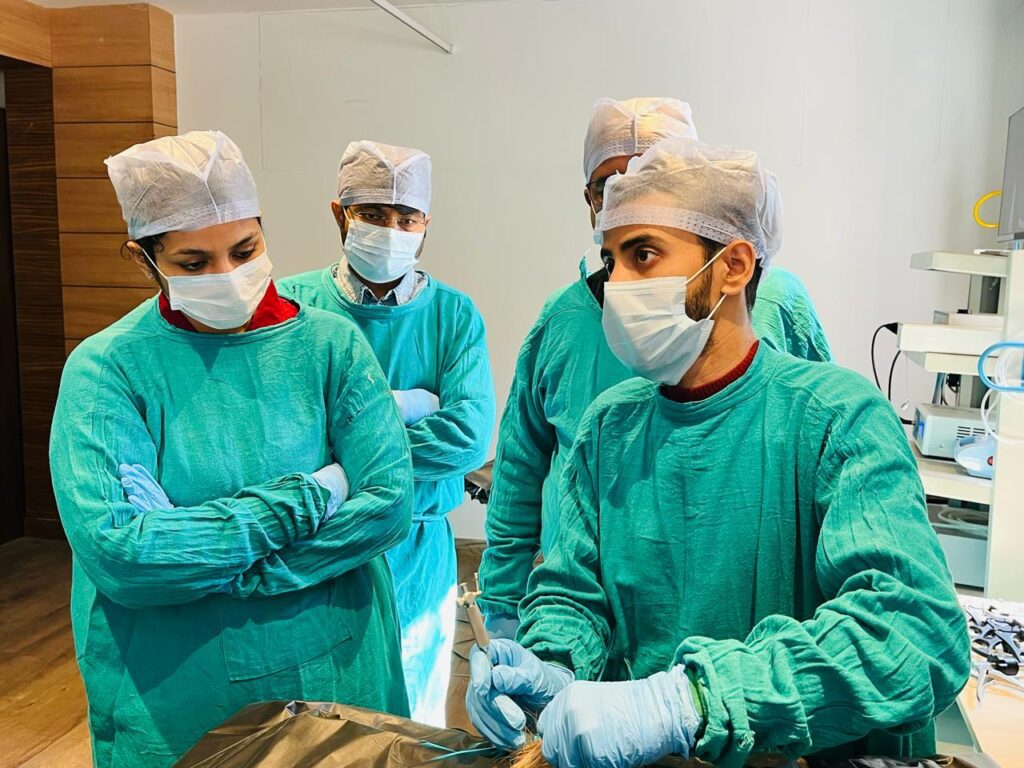
Faculty experience is crucial, as seasoned mentors guide trainees through complex laparoscopic techniques, troubleshooting, and decision-making. Advanced infrastructure, including modern laparoscopic simulators, operating theaters, and live surgery setups, ensures learners gain hands-on experience in a controlled and supportive environment.
The Medicity Research Institute stands out as one of the best laparoscopic training centers in India, with locations in DLF Phase 3, Gurugram, and Dubai Silicon Oasis, UAE. It offers an extensive range of courses, including fellowships that emphasize live surgical demonstrations and hands-on training. This approach enables trainees to build confidence and master intricate laparoscopic skills under expert supervision.
Certification and accreditation add further credibility to the training experience. The Medicity Research Institute is recognized among FOGSI laparoscopic training centres, ensuring its programs meet stringent quality standards set by professional bodies.
Incorporating live surgeries and practical exposure into the curriculum not only enhances learning but also prepares surgeons for real-world challenges, making such institutes essential for advancing laparoscopic training.
Laparoscopic Training in India: A Global Hub
India has emerged as a global hub for laparoscopic training, reflecting its rapid advancement in medical education and surgical expertise. Over the past decade, the country has gained international recognition for offering high-quality laparoscopic surgery training courses that attract surgeons from around the world. The combination of skilled faculty, modern infrastructure, and cutting-edge technology has positioned India as a preferred destination for advanced surgical training.
Among the popular laparoscopic training courses available, many are tailored to meet both beginner and advanced-level surgeons’ needs. These courses emphasize hands-on experience, simulation-based learning, and live surgical demonstrations. India’s affordability is a major advantage, offering world-class training at a fraction of the cost compared to Western countries without compromising on quality.
Prominent institutions and FOGSI laparoscopic training centres play a crucial role in setting benchmarks for excellence. These centres provide structured fellowship and certification programs, ensuring trainees gain comprehensive exposure to minimally invasive surgical techniques. The blend of international curriculum standards and local clinical diversity makes India’s laparoscopic training courses uniquely valuable for aspiring surgeons globally.
In summary, India’s laparoscopic training ecosystem offers a robust platform combining affordability, quality, and global accreditation, making it a sought-after destination for surgical education.
Future of Surgery: Why You Must Invest in Training
The future of surgery is rapidly evolving with the rise of robotic and advanced laparoscopic procedures transforming patient care. Surgeons who lack laparoscopic training risk falling behind as these minimally invasive techniques become the gold standard. Mastery of these skills is no longer optional but essential.
Continuous learning and upgrading surgical skills are crucial in today’s fast-paced medical environment. Laparoscopic courses provide the structured education and hands-on experience needed to stay competitive. By enrolling in a reputable laparoscopic training institute, surgeons can gain proficiency in the latest techniques and technologies.
Investing in laparoscopic training not only enhances surgical outcomes but also opens doors to new career opportunities. As healthcare increasingly demands precision and efficiency, ongoing education through laparoscopic courses ensures surgeons remain at the forefront of innovation, delivering superior patient care.
Conclusion
aparoscopic training is essential in today’s surgical landscape, equipping surgeons with the advanced skills needed for minimally invasive procedures. Mastery of laparoscopic surgery training not only enhances precision and patient outcomes but also defines a modern surgeon’s professional success. As technology evolves, staying updated through certified laparoscopic training programs becomes crucial for delivering high-quality care. Surgeons committed to excellence should actively seek out comprehensive laparoscopic training to refine their expertise and stay at the forefront of surgical innovation.
Frequently Asked Questions
Laparoscopic training courses typically range from 1 week to 6 months, depending on the program level. Basic laparoscopy workshops may last a few days, while advanced laparoscopic surgery training can span several months of hands-on experience.
In India, the cost of laparoscopic surgery training courses varies from ₹80,000 to ₹3,00,000. Fees depend on course duration, hands-on exposure, and whether it includes certification from reputed laparoscopic training institutes or hospitals
Yes, laparoscopic skills are highly transferable across specialties like gynecology, urology, and general surgery. Surgeons trained in minimally invasive techniques can apply core laparoscopic principles to multiple procedures, improving surgical precision and patient outcomes.
Laparoscopic training is crucial for modern surgeons due to the growing demand for minimally invasive surgery. It reduces recovery time, minimizes scarring, and enhances surgical precision—key benefits that improve patient satisfaction and clinical success.
To join a laparoscopic training course, candidates must typically hold an MBBS or MS/MD degree. Many advanced laparoscopic training programs in India require prior surgical experience or specialization in fields like general surgery or gynecology.